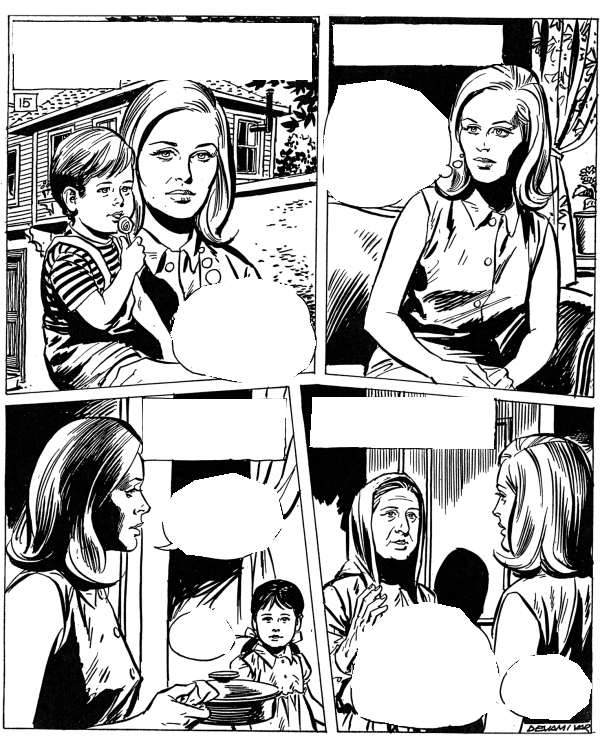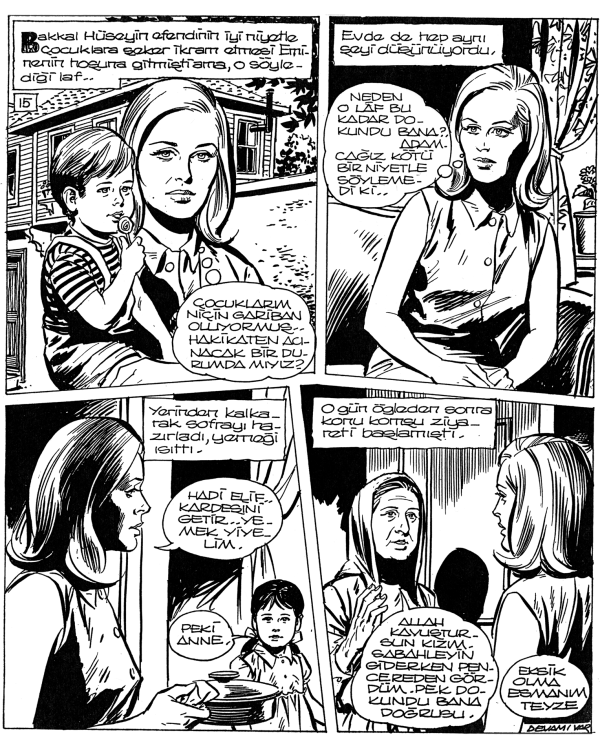
| Narrator: Bakkal Hüseyin efendinin iyi niyetle çocuklara şeker ikram etmesi Eminenin hoşuna gitmişti ama, o söylediği laf.. |
| The grocer Hüseyin efendi’s well-intentioned offer of candy to the children had pleased Emine, but the word he used... (Lit., the word he said) |
| Emine: Çocuklarım niçin (= ne için) gariban oluyormuş.. Hakikaten acınacak bir durumda mıyız? |
| Why would my kids be needy? Are we really in a state to be pitied? |
| Narrator: Evde de hep aynı şeyi düşünüyordu. |
| At home too, she was still thinking the same thing. (Lit., always thinking) |
| Emine: Neden o lâf bu kadar dokundu bana? Adamcağız kötü bir niyetle söylemedi ki.. |
| Why did that word have such an effect on me? (Lit., affect me so much) After all, the poor man didn’t say it with malice. (Lit., with bad intention) |
| Narrator: Yerinden kalkarak sofrayı hazırladı, yemeği ısıttı. |
| Getting up from her place, she set the table and heated up the food. |
| Emine: Hadi Elif.. Kardeşini getir.. Yemek yiyelim. |
| Come on Elif, go fetch your brother. Let’s eat. |
| Elif: Peki anne. |
| OK mother. |
| Narrator: O gün öğleden sonra konu komşu ziyareti başlamıştı. |
| That afternoon the regular neighborly visits began. (Lit., that day in the afternoon) |
| Aunt Esmanım (= Esma Hanım): Allah kavuştursun kızım. Sabahleyin giderken pencereden gördüm. Pek dokundu bana doğrusu. |
| May God reunite you, my child. (Lit., my girl) I saw (you) from the window this morning when you were leaving. (Lit., in the morning while you were going) It really made me quite sad. |
| Emine: Eksik olma Esmanım teyze. |
| Thank you for your concern, Aunt Esmanım. (Lit., Don’t be absent.) |