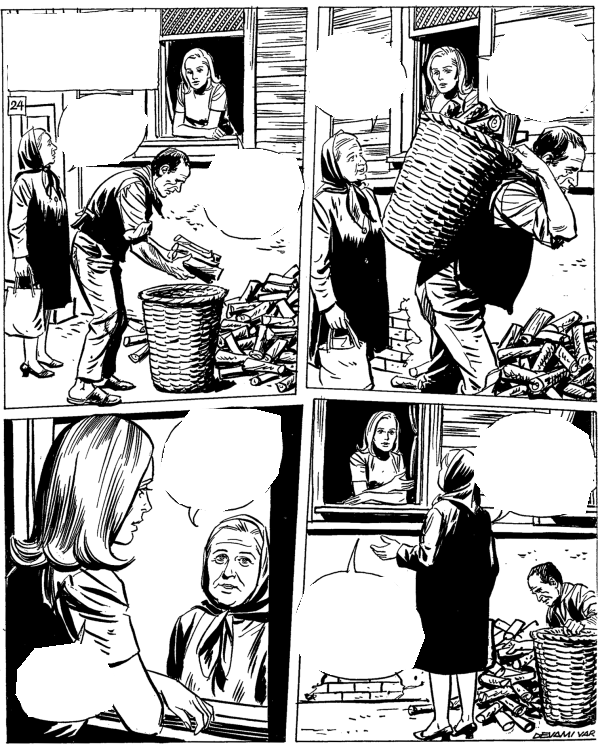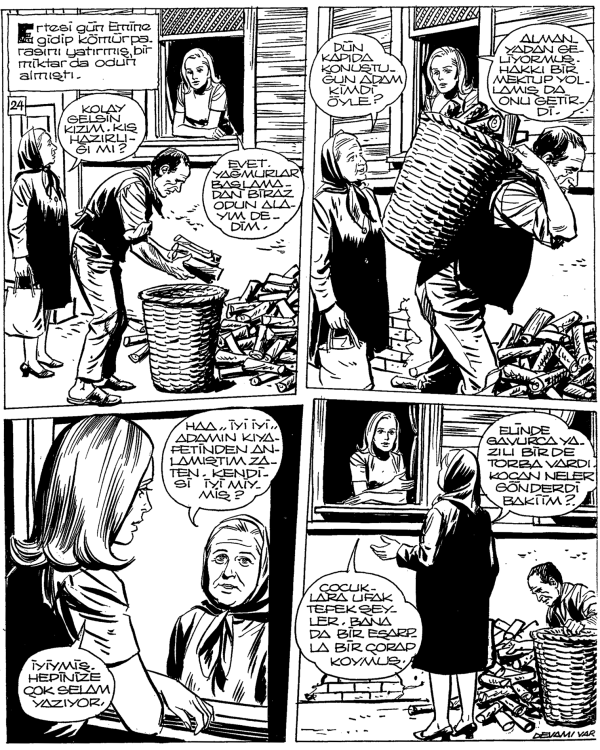
| Narrator: Ertesi gün Emine gidip kömür parasını yatırmış, bir miktar da odun almıştı. |
| The next day Emine went and deposited the money for coal and also purchased a quantity of firewood. |
| Esma hanım: Kolay gelsin kızım. Kış hazırlığı mı? |
| May the work go easily, my child. Is this preparation for winter? |
| Emine: Evet. Yağmurlar başlamadan biraz odun alayım dedim. |
| Yes. I thought I’d buy a little firewood before the rains begin. |
| Esma hanım: Dün kapıda konuştuğun adam kimdi öyle? |
| So who was the man you were speaking to at the door yesterday? |
| Emine: Almanyadan geliyormuş. Hakkı bir mektup yollamış da onu getirdi. |
| He says he was coming from Germany. Hakkı had sent a letter, and he brought it. |
| Esma hanım: Haa.. iyi iyi.. Adamın kıyafetinden anlamıştım zaten. Kendisi iyi miymiş? |
| Oh, that’s fine, fine. I had already gathered that from the way the man was dressed. (Lit., from the man’s attire) Is he well? (i.e., Hakkı) |
| Emine: İyiymiş. Hepinize çok selam yazıyor. |
| He seems to be well. He sends warm greetings to all of you. (Lit., is writing many greetings) |
| Esma hanım: Elinde gavurca yazılı bir de torba vardı. Kocan neler gönderdi bakiim? (spoken form of bakayım) |
| He had a bag in his hands too with some foreign writing on it. (Lit., non-Muslim writing) So what did your husband send? (Lit., let me see.) |
| Emine: Çocuklara ufak tefek şeyler. Bana da bir eşarpla bir çorap koymuş. |
| Some little things for the kids. And for me he sent a scarf and a pair of stockings. (Lit., he put) |