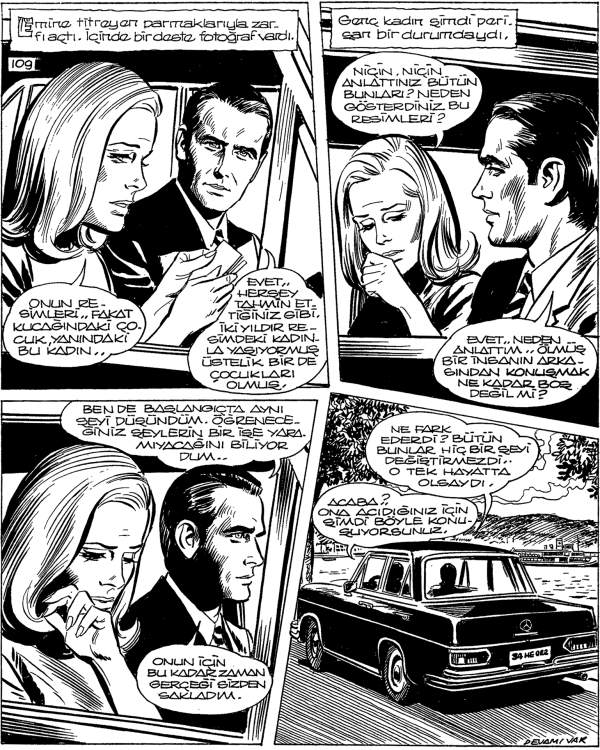
| Narrator: Emine titreyen parmaklarıyla zarfı açtı. İçinde bir deste fotoğraf vardı. |
| With trembling fingers Emine opened the envelope. There was a bunch of photographs inside. |
| Emine: Onun resimleri.. Fakat kucağındaki çocuk, yanındaki bu kadın.. |
| Pictures of him. But the child in his lap, and this woman at his side... |
| Bülent: Evet.. herşey tahmin ettiğiniz gibi. İki yıldır resimdeki kadınla yaşıyormuş üstelik bir de çocukları olmuş. |
| Yes, everything as you suspected. He had apparently been living with the woman in the picture for two years. And on top of that, they also had a child. |
| Narrator: Genç kadın şimdi perişan bir durumdaydı. |
| The young woman was now beside herself. (Lit., in a distressed state) |
| Emine: Niçin, niçin anlattınız bütün bunları? Neden gösterdiniz bu resimleri? |
| Why did you tell (me) all this, why? (Lit., these) Why did you show (me) these pictures? |
| Bülent: Evet.. Neden anlattım.. Ölmüş bir insanın arkasından konuşmak ne kadar boş değil mi? |
| Yes, why I told (you)... It is useless to speak of the dead, isn’t it? (Lit., How useless it is to speak from the back of a person who has died, isn’t it?) |
| Bülent: Ben de başlangıçta aynı şeyi düşündüm. Öğreneceğiniz şeylerin bir işe yaramıyacağını biliyordum.. |
| At first I thought the same thing. I knew that the things you’d learn would be of no use. |
| Onun için bu kadar zaman gerçeği sizden sakladım. |
| That’s why I hid the truth from you for so long. |
| Emine: Ne fark ederdi? Bütün bunlar hiç bir şeyi değiştirmezdi.. O tek hayatta olsaydı. |
| What difference would it have made? All these (facts) wouldn’t have changed anything. If only he were alive. (Lit., in life) |
| Bülent: Acaba? Ona acıdığınız için şimdi böyle konuşuyorsunuz. |
| I wonder. Are you talking like this now because you pity him? |